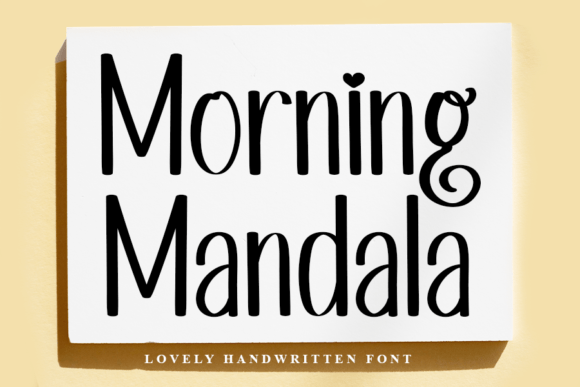
Morning Mandala: A Handwritten Font for Editorial Elegance
In the world of editorial design, the choice of a typeface is rarely just a stylistic decision. It is a foundational element that establishes tone, guides the reader’s journey, and silently communicates the value of your content. For publishers, bloggers, and creators crafting magazines, ebooks, newsletters, and guides, a font must balance beauty with function. Morning Mandala emerges as a compelling option within the Script Amp category, offering a blend of handwritten charm and editorial structure that can elevate a wide spectrum of projects.
The Visual Personality of Morning Mandala
Morning Mandala is described as a gorgeous and elegant handwritten font. Its character lies in its ability to feel personal and artful without sacrificing clarity. Unlike some script fonts that prioritize flourish over legibility, Morning Mandala maintains a consistent baseline and thoughtful letterforms. This gives it a grounded, readable quality, making it suitable for more than just a single decorative word. The elegance it promises isn’t overly formal; it’s approachable, carrying a warmth that resonates with lifestyle content, creative guides, and personal branding.
The fact that this font is PUA encoded is a significant practical detail for designers. This encoding means you have access to all of the glyphs and alternates potentially included in the font file. For editorial work, this allows for customization and variation within your headings or accent text, letting you swap in an alternate ‘a’ or a more decorative ampersand to perfectly suit a specific layout or mood, all without needing complex software workarounds.
Strategic Uses in Editorial Layouts
Morning Mandala shines as a display font, best employed for elements meant to capture attention and set a visual tone. Its primary role is in creating a strong visual hierarchy within your publication. Here are concrete applications where its personality supports both design and reader engagement:
- Blog Headers & Article Titles: For a lifestyle or wellness blog, using Morning Mandala for post titles instantly conveys a thoughtful, human touch. It frames the content as crafted and personal.
- Magazine & Ebook Covers: On a digital magazine cover or an ebook title page, such as a recipe collection or a wedding planning guide, the font adds immediate elegance and perceived value.
- Chapter Openers & Section Headings: Within a longer ebook or printable guide, using Morning Mandala for chapter titles breaks the content into clear, aesthetically pleasing sections, improving navigation and retention.
- Pull Quotes & Highlighted Graphics: Isolating a key quote or statistic in a newsletter or article with this font draws the reader’s eye and emphasizes important takeaways with style.
- Lead Magnets & Printable Materials: For worksheets, planners, or downloadable workbooks, the font on the title and section headers makes the material feel special and professionally designed, increasing its appeal.
It is important to note that, as a script-style font, Morning Mandala is not typically suited for long body copy paragraphs. Its strength is in accent typography and headings. For extended reading, pairing it with a highly readable serif or sans-serif font for the body text is essential.
Readability and Technical Considerations
When integrating any display font into editorial work, practical readability must be considered across mediums. For screen reading in blogs or ebooks, ensure Morning Mandala is used at a sufficient size and with ample spacing. In PDF exports for printables or digital magazines, test the rendering to confirm the elegant details remain crisp. On mobile layouts, where space is constrained, its use might be reserved for the primary headline rather than multiple subheadings to maintain clarity.
The handwritten style can also impact mood. It leans towards inspirational, creative, intimate, or curated content. It would be less fitting for a highly technical manual or a news publication needing stark objectivity. Its use, therefore, is a deliberate choice about the emotional subtext of your publication.
Building Consistency and Brand Identity
For independent content brands, a consistent typographic voice is a pillar of identity. Using Morning Mandala across your blog headers, newsletter banner graphics, and social media quote posts creates a recognizable visual thread. This repetition builds brand memory. Whether you’re a coach publishing digital workbooks or a creator with a paid newsletter, this font can become part of your signature aesthetic, helping your audience instantly identify your materials.
A key to successful editorial design is font pairing. Morning Mandala, as a script font, needs a stable partner for body text. A classic serif font, like a Georgia or a modern serif like Abril Fatface’s text counterpart, offers excellent readability and contrasts nicely with the script’s fluidity. For a more contemporary feel, a clean sans-serif font such as Open Sans or Lato for body copy and captions creates a clean, structured base that lets the handwritten headings stand out beautifully. This pairing establishes a complete and professional typographic system.
A Note on Licensing for Publishing Work
Most creators in this space will require a commercial license for their fonts. If you are using Morning Mandala in ebooks you sell, templates you offer, printables as lead magnets or paid products, client publications, or within a paid newsletter’s graphics, you must ensure your license covers these uses. Always verify the licensing terms provided with the font to confirm it permits embedding in digital downloads and use in commercial projects. This is a fundamental step in ethically and legally building your design assets.
Morning Mandala represents a specific tool in the modern typography toolkit—one that brings a human, artful voice to the forefront of your design. By applying it strategically to headings, covers, and accents, and supporting it with highly readable body fonts, you create editorial content that is not only well-structured but also emotionally resonant. It supports the core goal of any publisher or content creator: to deliver valuable information in a form that is attractive, engaging, and reflective of the care put into its creation.